May 28, 2026
Thursday May 28 2026 - Scanner News
(GERING, Neb.) -- The City of Gering notified residents yesterday that a water main break was causing discolored water. Hopefully that was rectified yesterday.
Multi-day severe weather chances here. According to the weather service in Cheyenne, chances for afternoon showers and thunderstorms will tick up a notch on Friday between 30 and 70 percent. In addition, a few isolated storms will have the potential to become strong to severe.
Primary hazards include lightning, gusty winds, isolated hail, and local heavy rainfall. Banner County completed containment lines on the graduation fire as well. They finished lines through the timber on both the northeast and southwest ends as well as mop up on hot spots on the interior.
They had one aerial drop of retardant from the seat plane. They will continue monitoring with one truck and a crew. And this is a serious matter.
Cattle producers are urged to be vigilant after a tick-borne parasite that affects cattle was detected in several Nebraska counties. The Asian longhorn tick, ALHT, is the primary carrier responsible for spreading the parasite. Although ALHT has not been found in Nebraska, cattle imported into the state have tested positive.
The tick has already become established in 26 other states. The best method of prevention is tick control and good management practices for your herd, including external parasite control, said state veterinarian Dr. Roger Dudley. If the disease is suspected, you should report it to your veterinarian immediately.
Panhandle Scanner covers news in the areas of police and crime, severe weather, fire and rescue, missing persons, and safety alerts, and that's another safety alert brought to you today by R&C Welding in Gering, Nebraska.
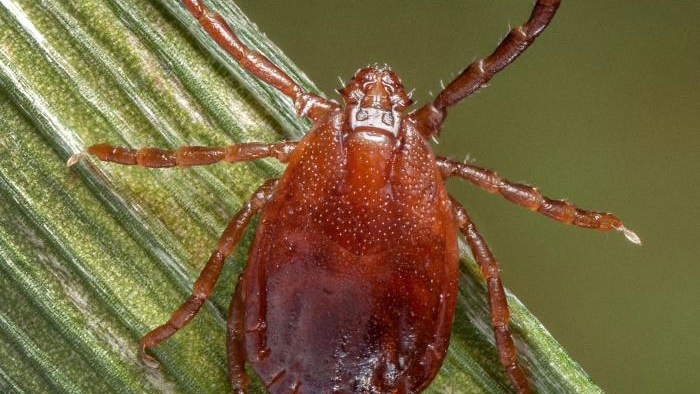
Asian longhorned ticks (Haemaphysalis longicornis) are invasive pests that pose a serious threat to livestock in the United States. They can form large infestations on one animal and spread diseases that impact both animals and people.
In November 2017, public health officials in Hunterdon County, NJ, reported the first detection of the Asian longhorned tick outside of a U.S. port of entry inspection site. It then spread to numerous Eastern States. Asian longhorned ticks aren't normally found in the Western Hemisphere.
APHIS provides updates to State agencies to inform planning, surveillance, outreach, control, and overall collaboration on the Asian longhorned tick.
What to Look For
Asian longhorned tick populations in the United States are parthenogenetic, meaning an individual female can lay eggs without mating, essentially cloning herself to create the next generation. This is one reason the Asian longhorned tick is a successful invader of new geographic regions.
- Unfed Asian longhorned ticks are light reddish-tan to dark reddish with brown, dark markings.
- Adult females are grey-green with yellowish markings and the size of a pea after feeding. Male ticks are rare.
- Other unfed stages of the tick are very small, about the size of a sesame seed, or even smaller.
For more details, view our pest alert (1004.99 KB) and story map about Asian longhorned ticks.
How To Prevent This Disease
Various strategies effectively mitigate tick populations on hosts and in the environment.
Livestock
- Regular tick treatments should be effective against Asian longhorned ticks. Consult your veterinarian or agriculture extension agent about which products to use.
- Check your livestock for ticks regularly.
- Safely remove ticks from people and pets as quickly as possible. If you think you've found an Asian longhorned tick, seal it in a zip-top bag and give it to your veterinarian for identification.
Environment
- Habitat modifications can help prevent ticks on feedlots and pastures. This may include mowing grass, removing trees, reducing shade by thinning trees, understory removal, and placing mulch barriers.
- Apply acaricide using label instructions to tick habitats, such as woodland edges and grassy patches, during times when ticks are most actively seeking hosts. Although it varies by year, Asian longhorned ticks are generally active from March to November. Consult your State and local regulations for approved acaricides.
No comments yet. Be the first to say something!